
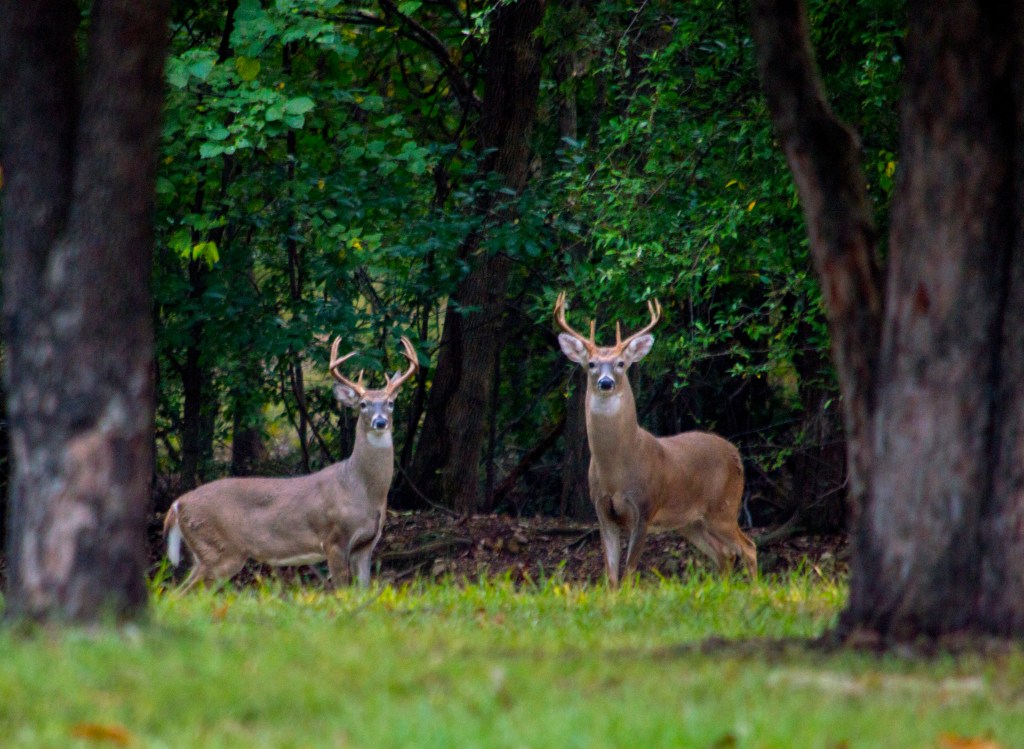
Twice now, a deer from the same piece of ground in eastern Ballard County has tested positive for chronic wasting disease.
The first, found on Dec. 6, 2023, was the first case ever recorded in Kentucky. The second was a 2½-year-old white-tailed buck a hunter took on Nov. 16, 2025, during modern gun season. Routine testing caught it, two independent tests confirmed it, and the Kentucky Department of Fish and Wildlife Resources (KDFWR) announced it in January 2026.
Joe McDermott, KDFWR’s deer program coordinator, told SouthwestKY.com that because both deer were found on the same property, he thinks the two cases are connected. The closest he would narrow down the location was the eastern portion of the county.
Modern gun season opens Saturday, Nov. 14, and runs through Nov. 29. Asked what he would tell hunters in our area, McDermott kept it simple:
“I really just want hunters to get out in the woods and participate in the season.”
A disease you can’t see coming
The hard thing about CWD is that a sick deer usually looks just fine. The disease is slow, and an infected animal can go many months without showing a thing. That’s why testing matters more than how a deer looks.
CWD is caused by a prion, a protein that’s normally found in the body. In rare cases a prion misfolds, and once an animal gets sick, the disease works its way into the brain and spine. Over time, prions build up in nerve and lymph tissue. Late signs can include a deer losing its fear of people, keeping away from other deer, drinking and urinating more, and drooling. There is no known cure, and the disease always kills. At the end, it often looks like pneumonia.
It belongs to a family of illnesses called transmissible spongiform encephalopathies. Its relatives include scrapie in sheep and goats, mad cow disease in cattle and Creutzfeldt-Jakob disease in people.
According to KDFWR, CWD spreads through contact with infected saliva, blood, urine and feces, or through contaminated food, soil and water. Live deer can carry it to new places, and so can carcasses and high-risk carcass parts that get moved.
From a Colorado pen to our backyard
CWD was first noticed in January 1967, in captive mule deer at the Colorado Division of Wildlife’s Foothills Wildlife Research Facility in Fort Collins. Nobody knew what they were looking at.
It took until 1978 for the late Dr. Elizabeth Williams, working at Colorado State University research facilities, to identify it as a prion disorder. That same year it was classified as a transmissible spongiform encephalopathy. In 1979 it turned up in captive deer and, for the first time, captive elk at Wyoming’s Sybille research facility. In 1981 Canada recorded its first diagnosis, in mule deer at the Toronto Zoo, and the first wild deer with CWD was reported.
For years it stayed mostly out West, in a pocket centered on Fort Collins that stretched from northeastern Colorado into southeastern Wyoming and Nebraska.
That changed in February 2002, when Wisconsin announced three deer killed near Mount Horeb had tested positive. It was the first time CWD had been found east of the Mississippi River. Europe saw its first case in 2016, in a wild reindeer in southern Norway, and West Tennessee confirmed its first cases in late 2018. KDFWR’s 2026 response plan reports the disease is now confirmed in 36 states, Canada and Europe.
Kentucky’s long watch
Kentucky started looking for CWD the same year Wisconsin found it. KDFWR has run statewide surveillance since 2002 and wrote its first CWD response plan that year, updating it over time.
For more than two decades, the state came up clean. Then came Ballard County in December 2023. Since then, CWD has been confirmed in a wild deer in Pulaski County in October 2025 and in nine deer from a captive cervid facility in Breckinridge County.
Cases across the state line count, too. In June 2025, KDFWR added Henderson, Union and Webster counties to its surveillance area after CWD showed up in a deer harvested just across the Ohio River in Posey County, Indiana.
County-by-county testing results for every surveillance zone county are posted at fw.ky.gov/cwd.
Why McDermott wants more does
McDermott’s push to get hunters in the woods comes with a specific ask: take does.
He said the state struggles to take enough of them across much of Kentucky, and the Purchase is no exception. Only 43% of successful hunters in Kentucky last season took an antlerless deer.
He had a word for farmers and landowners, too. A deer eats 5 to 10 pounds of quality food a day, he said, so every antlerless deer taken off the landscape leaves that much more for crops, the deer that remain and other wildlife.
Before you head out
Fulton and Hickman counties are inside the CWD Surveillance Zone, along with Ballard, Breckinridge, Calloway, Carlisle, Casey, Graves, Hardin, Henderson, Laurel, Lincoln, Marshall, McCracken, McCreary, Meade, Pulaski, Rockcastle, Union, Wayne, Webster and Whitley counties. Here’s what that means this season:
- Testing: Free testing is available through unstaffed CWD Sample Drop-off Sites or a mail-in kit. Deer taken in the zone must go to a drop-off site inside the zone, and hunters provide the harvest location. Check fw.ky.gov/cwd for current testing requirements.
- Carcass movement: Whole carcasses and high-risk parts can’t leave the zone. Deboned meat, clean skulls and teeth, antlers, hides and finished taxidermy mounts are allowed.
- Rehabilitation: Rehabilitating deer is prohibited in the zone.
- Feeding and baiting: Contact-style feeders such as troughs, funnels and gravity feeders aren’t allowed in the zone. A statewide feeding ban runs March 1 through July 31. See the 2026-27 Kentucky Hunting and Trapping Guide for full rules.
What about the meat?
There are no confirmed human cases of CWD. Still, the CDC says that if it could spread to people, eating meat from an infected animal is the most likely way. There’s reason to be careful: eating meat from animals with mad cow disease has been linked to a variant of Creutzfeldt-Jakob disease in people, and studies have shown primates closely related to humans can get CWD. A 2025 CDC journal article notes prions can be found in deer muscle tissue.
The CDC recommends hunters in affected areas:
- Don’t shoot, handle or eat animals that look sick or act strangely, and don’t touch or eat meat from animals found dead.
- Avoid handling internal organs, especially the brain or spine, and don’t use kitchen knives or tools for field dressing.
- Strongly consider testing your deer before eating it, ask your processor to process it individually and don’t eat meat from any animal that tests positive.
- Label each deer’s wrapped packages so the meat can be pulled from the freezer if the animal tests positive.
KDFWR likewise advises hunters not to move carcasses out of the zone and not to harvest or eat any game animal found sick or dead.
If you see a deer that looks sick, call the Kentucky Fish and Wildlife Information Center at 800-858-1549 or email info.center@ky.gov, weekdays 7 a.m. to 3:30 p.m., or use the online Sick or Dead Deer Reporting Form. Maps and full rules are at fw.ky.gov/cwd.
Questions or news tips? Send them to news@southwestky.com.
Sources
- Joe McDermott, deer program coordinator, Kentucky Department of Fish and Wildlife Resources, email responses to SouthwestKY.com, Sept. 25, 2026
- Kentucky Department of Fish and Wildlife Resources: CWD page; CWD Surveillance Zone page; 2026 CWD Response and Management Plan; news releases dated Jan. 7, 2026, Oct. 29, 2025, and June 12, 2025; 2026-27 season dates
- Centers for Disease Control and Prevention, “About Chronic Wasting Disease,” and Emerging Infectious Diseases (April 2025)
- California Department of Food and Agriculture, CWD guidelines
- CWD Alliance (cwd-info.org), CWD timeline
- Colorado State University Prion Research Center
- Colorado Encyclopedia, “Chronic Wasting Disease”
- Benestad et al., Veterinary Research (2016)


Leave a Reply